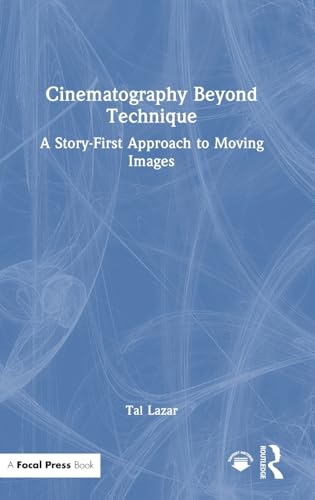
Cinematography beyond technique : a story-first approach to moving images / Tal Lazar.
Material type: TextPublication details: NewYork; Routledge, c2026.Description: xiv, 282 p. ; color ill.: 22cmISBN:
 - 9781041137283
- 9781041137276
- TR850 .L39 2026
| Item type | Current library | Collection | Call number | Copy number | Status | Barcode | |
|---|---|---|---|---|---|---|---|
 Books
Books
|
Zetech Library - Ruiru Campus General Stacks | Non-fiction | TR850 .L39 2026 (Browse shelf(Opens below)) | C1 | Available | z013531 |
Includes bibliographical references and index.
Visual language -- Breaking down the script -- Characters and perspective -- The visual strategy -- Introduction to lenses -- Selecting a lens -- The cinematic composition -- Expression with colour -- Movement and time -- The language of light -- Practical lighting -- The director and the cinematographer
"This book opens a new door into visual storytelling by using a story-first method to reframe cinematography as a language, not just a technical craft. Readers will learn to think about images not only as products of gear and technique, but as carefully crafted expressions of narrative intent. The book begins not with lighting setups or lens choices, but with story: What is the emotional core of a scene? Does a high-angle shot serve the character? Does the lighting deepen the narrative? Focusing on the intent and expression of images, rather than the mechanics, readers learn how creative decisions like camera angle, movement, and lighting either support or obscure that story. Through accessible exercises and clear examples, the book teaches aspiring filmmakers how to interpret images and evaluate their effectiveness, asking Does the visual choice communicate what I intended? Could a different composition, perspective, or level of shadow alter the emotional response? In doing so, it helps readers grow as confident visual storytellers, regardless of their technical background. With an emphasis on intention over execution, this book provides a fresh and practical framework for those seeking to create images that are not only beautiful, but narratively effective. This book provides key reading for students of filmmaking and cinematography, as well as aspiring and early-career filmmakers, including directors, screenwriters, and producers, who may feel intimidated by the technical aspects of cinematography but need to make or guide visual decisions. An online instructor's manual provides additional support, making it easy for educators to incorporate the book and its exercises into their curriculum. The book is structured to be adaptable into a complete academic course, emphasizing hands-on practice and analysis regardless of the equipment students use"-- Provided by publisher.
There are no comments on this title.